
HSR-extreme-heat.jpgRising temperatures spark surge in medical visits 

Findings from a recent study by Carelon Research underscore the need for proactive strategies to support at-risk populations during high heat events. 


Domain(s)
: Health equity/SDoH, cost of care


Summary

Background

Extreme summer heat days are becoming increasingly more common and more severe. Prior research has found this shift in climate patterns is associated with adverse health effects. The impact on costs and inpatient and outpatient utilization, however, is not well understood. As such, Carelon Research evaluated how changes in temperature affect healthcare utilization and spending. Findings were recently presented at the 2025 American Society of Health Economists Annual Conference in Nashville, Tennessee.
 

Methods

Analyzing claims from 35 million individuals with commercial, Medicare Advantage (MA) or Medicaid coverage between 2016-2023, we linked claims with temperature and precipitation data (combined as heat index) at the Census tract level.


Results

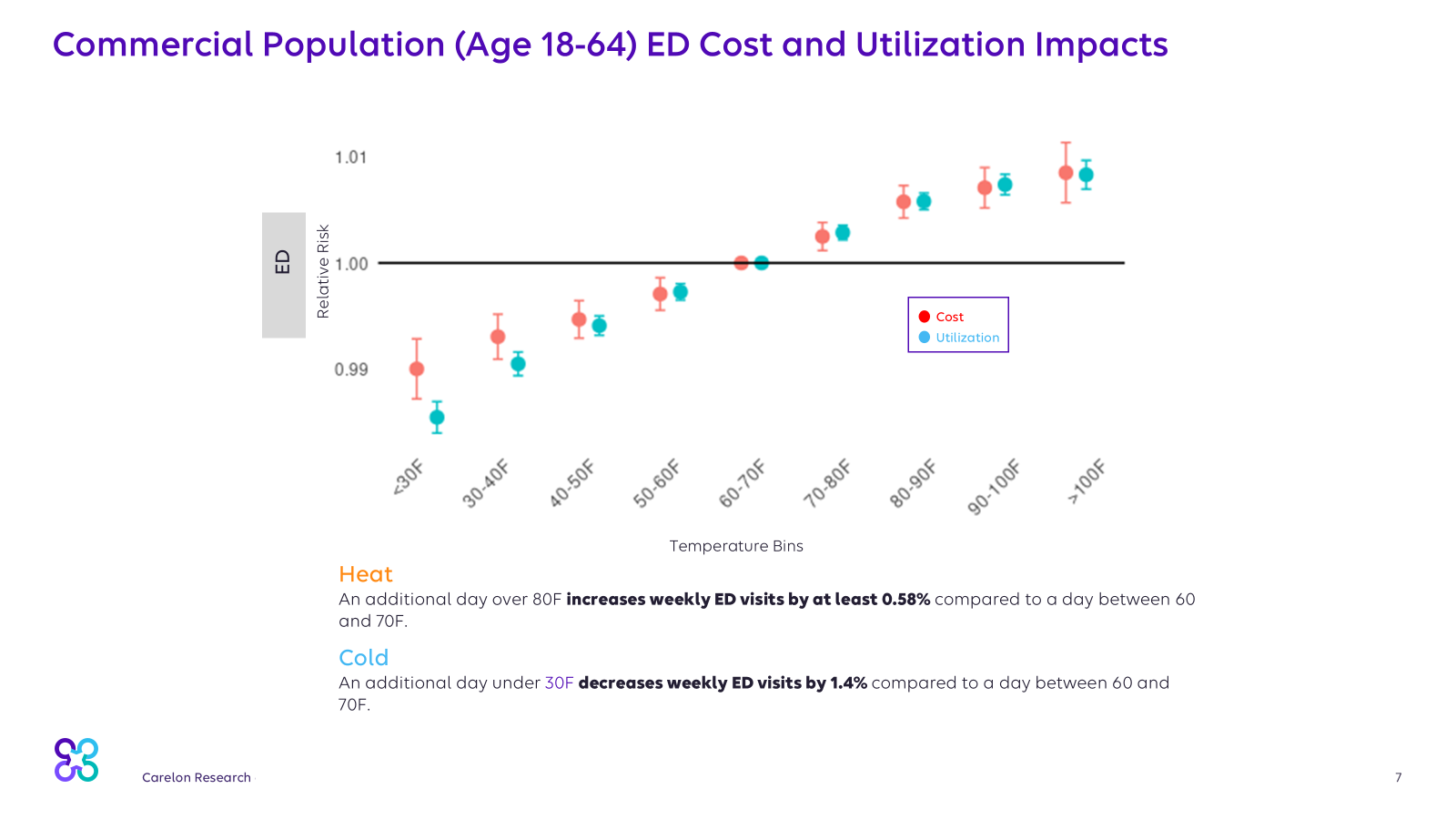
The Carelon Research team found a nearly linear relationship between heat and utilization and cost. Cold weather days were associated with decreases in utilization and costs, while hot days were associated with increased utilization and cost. As shown in the figure below, days above 70-80F increase Emergency Department (ED) utilization and costs as compared to a day in the reference temperature (60-70F).

Fig 1 HSR.png

Further evidence of the negative health impacts of extreme heat was shown in a recently published study which showed that patients with chronic kidney disease (CKD) saw increased kidney-related, heat-related, and all-cause increases in ED utilization. Furthermore, heat and kidney related inpatient and outpatient utilization and costs were also shown to increase significantly. A weeklong heat wave was shown to increase utilization and costs for the CKD population by nearly 4% for all-cause utilization and 15% for kidney-related utilization.


Key Takeaways
  • As warmer weather and fewer cold days are expected, healthcare costs and utilization are likely to increase.
  • Findings underscore the need for proactive strategies to support at-risk populations during high heat events.
  • Recommended adaptations include:
    • Expanded telemedicine access
    • Advanced prescription fills
    • Mail-in Rx orders
    • Community education and support
  • This research adds to the growing body of evidence supporting the integration of environmental and social risk factors into care models and resource planning.

Publications

Carelon Research project team: 
Winnie Chi, Amy Liu, Jeff Romine 


For more information on a specific study or to connect with the Actionable Insights Committee,
contact us at [email protected].

Sponsor: Carelon Research, Inc., a subsidiary of Elevance Health.

Dissemination and sharing of the Newsletter is limited to Elevance Health and its subsidiaries, and included findings and implications are for Elevance Health and its affiliates’ internal use only.

Ready to get started? Sign up now!

Lorem ipsum dolor sit amet

2-Col, Left Image

Lorem ipsum dolor sit amet, consectetur adipisicing elit, sed do eiusmod tempor incididunt ut labore et dolore magna aliqua. Ut enim ad minim veniam, quis nostrud exercitation ullamco laboris nisi ut.

  • Many addon features
  • Fully responsive & adaptive
  • SEO optimized
  • Attractive with a modern touch
  • Full Support

Consectetur adipiscing elit...

Joanna C.

"Et harum quidem rerum facilis est et expedita distinctio!"

Stanley T.

"Nam libero tempore, cum soluta nobis est eligendi."

Danielle W.

"Temporibus autem quibusdam et aut officiis debitis!"

Teams at Carelon Research