
 Does this really work? Best practices for using real-world healthcare data to evaluate medical interventions
 Existing guidance for the comparative assessment of medical interventions using real-world data is vast and complex. A new step-by-step guide from Carelon Research helps decision makers and researchers in the creation and evaluation of such studies. Summary Background Methods For more information on a specific study or to connect with the Actionable Insights Committee, Sponsor: Carelon Research, Inc.
Domain(s): All therapeutic areas and cost/quality of care assessments
Increasingly, data collected during routine healthcare encounters, such as claims and electronic health records (EHR), are used to investigate treatment effectiveness and safety. Such studies require relevant and reliable data as well as careful design, analysis, and interpretation.
In RCTs, patients are randomized to treatment vs. control. In contrast, treatment decisions in real-world contexts are influenced by many factors (e.g., comorbidities, patient/provider preferences, costs), that can confound the causal effect of a treatment on the outcome of interest. Some of these factors may not even be observable by the research team.
Improvements in data quantity and quality as well as methodology over the last decade allow us to more confidently extract underlying, causal relationships from observational data, and to augment the high-quality evidence base available to health-care decision-makers. However, existing methodological guidance is vast and complex.
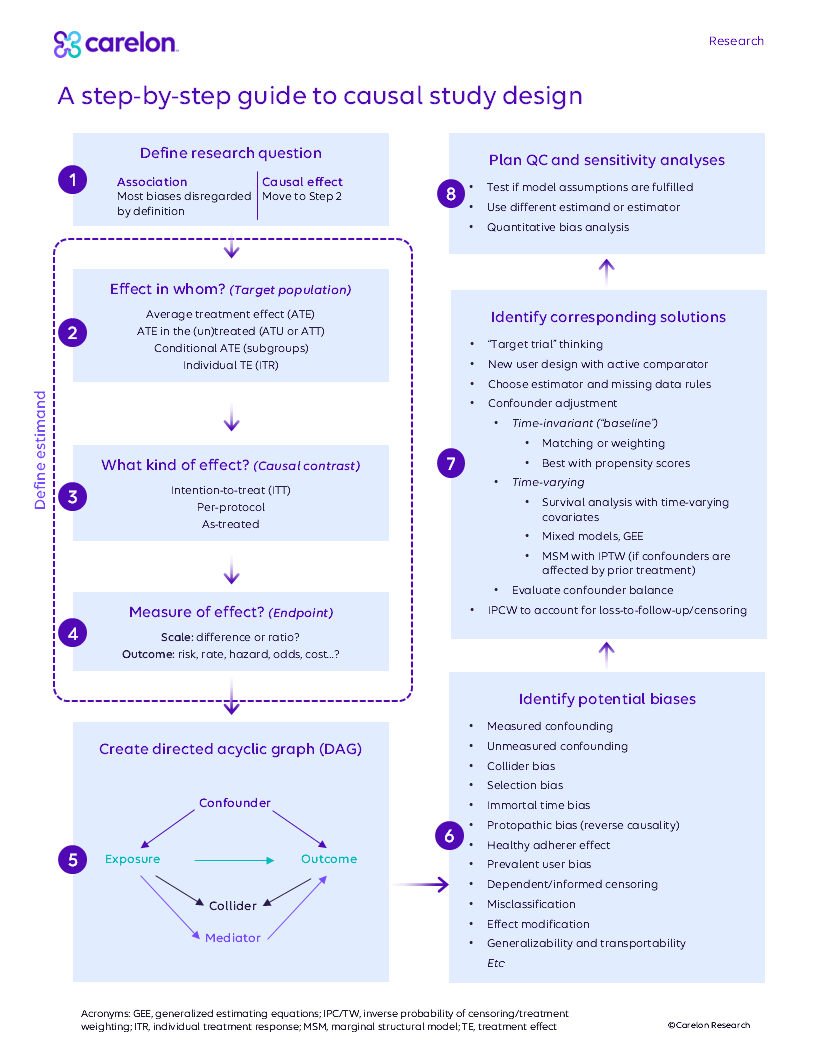
At Carelon Research, we created a concise step-by-step guide to causal inference to assist decision-makers and researchers in the creation and evaluation of such real-world studies.
Results
Key Takeaways
Publications
This research has been published at the following venues:
Carelon Research project team: Sarah Hoffman, Nilesh Gangan, Xiaoxue Chen*, Joseph L. Smith*, Arlene Tave, Yiling Yang*, Michael Grabner
*Carelon Research associates at the time the study was conducted.
contact us at [email protected].
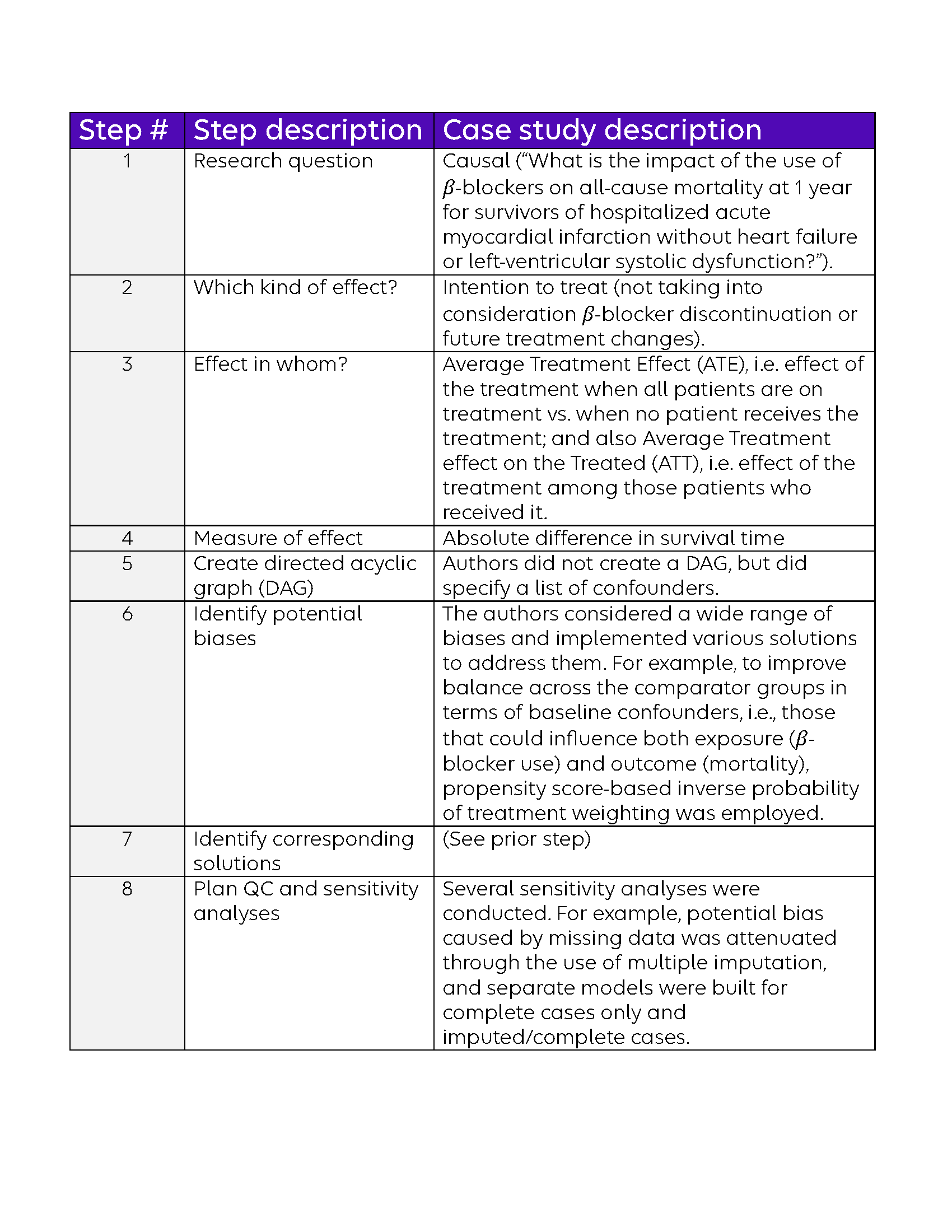
[1] Dondo TB, Hall M, West RM, Jernberg T, Lindahl B, Bueno H, Danchin N, Deanfield JE, Hemingway H, Fox KAA, Timmis AD, Gale CP. β-Blockers and Mortality After Acute Myocardial Infarction in Patients Without Heart Failure or Ventricular Dysfunction. J Am Coll Cardiol. 2017 Jun 6;69(22):2710-2720. doi: 10.1016/j.jacc.2017.03.578.
Lorem ipsum dolor sit amet, consectetur adipisicing elit, sed do eiusmod tempor incididunt ut labore et dolore magna aliqua. Ut enim ad minim veniam, quis nostrud exercitation ullamco laboris nisi ut.

"Et harum quidem rerum facilis est et expedita distinctio!"

"Nam libero tempore, cum soluta nobis est eligendi."

"Temporibus autem quibusdam et aut officiis debitis!"